|
| |
Gallipoli and evolving commemoration - the new Turkish perspective | Seminars 2026
Seminar Date: Thursday 23 April 2026 @ 7pm Mel | 12pm GR | 10am UK | 5am NY
Location: Live Stream Only: YouTube, or Facebook
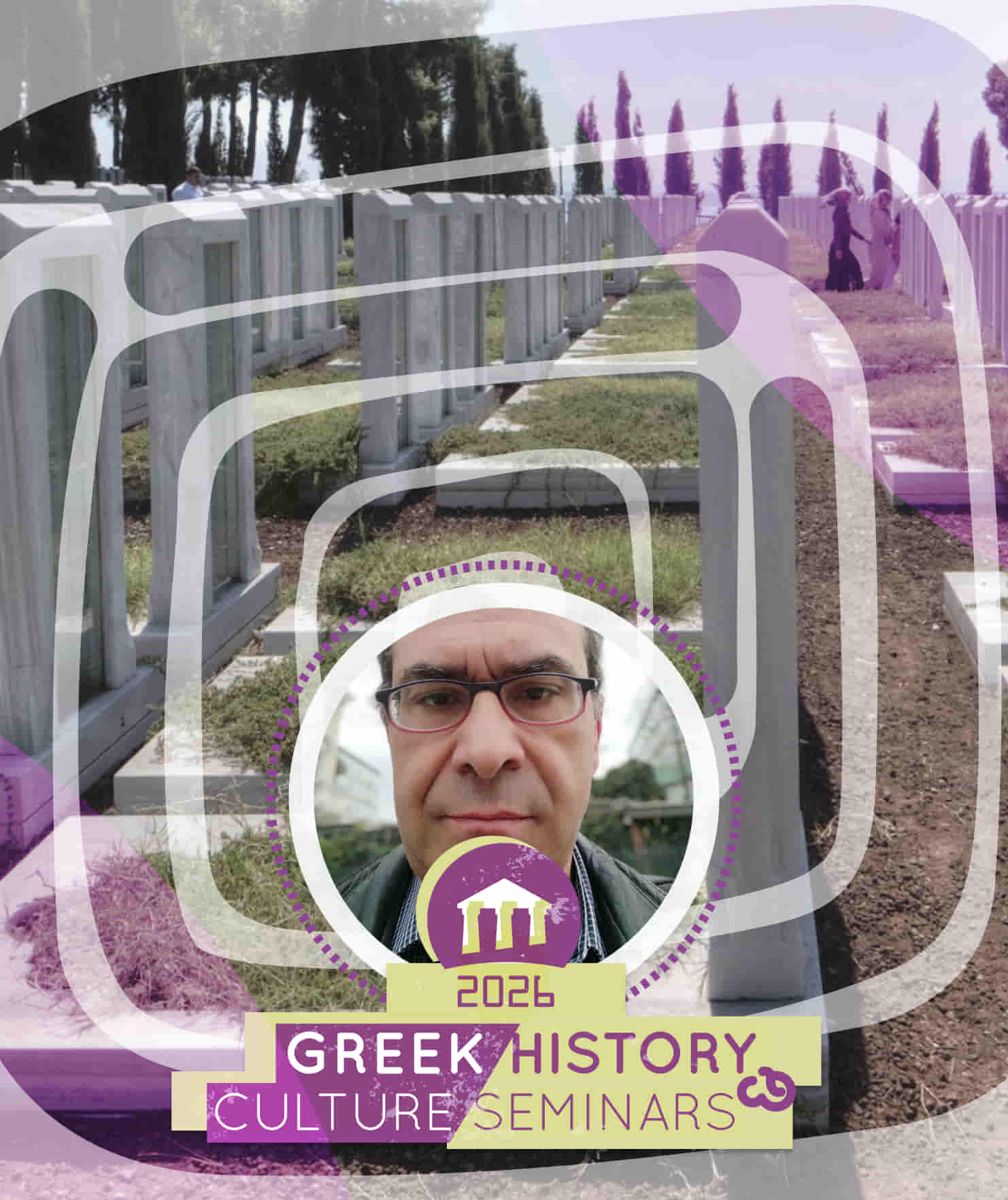
Presenter: Assist. Prof Vlasis Vlasidis
Language of Presentation: English
Entry: FREE |
|
|
| |
Synopsis
The Gallipoli campaign is considered among the military failures of the British and French during World War I. It left a very strong imprint on the memory of the British, Australians and New Zealanders. Already from the interwar period hundreds of veterans took cruises to visit the battlefields and their cemeteries, built by the Imperial War Graves Commissions (IWGC). At the end of the 20th century there were tens of thousands of British, Australians and New Zealanders who participated in Anzac Day and the parade at Canakkale. The Turks had their own monuments and their own ceremonies, on different dates. There was space for everyone. In the most recent decade the Erdogan regime has changed both the landscape and the events format, by building gigantic museums for every major battle and has surrounded all the British and ANZAC memorials and cemeteries with replicas of monuments with the Mustafa Kemal figure and information signs thus reducing the presence of the ANZAC and the British in the field. All this has created negative feelings among the CWGC authorities and veterans' associations, resulting in reduced visitor numbers.
|
|
|
|
|
| |
Bio
Vlasis Vlasidis studied history at the School of Philosophy of Aristotle University of Thessaloniki. He completed his graduate studies and wrote his dissertation at the same school. He has received numerous scholarships, the most significant of which was from the German Marshall Fund. He has published many articles in academic journals on the interwar period. He is a member of the editorial team at www.macedonian-heritage.gr.
He is a research associate at the Macedonian News Agency and teaches the history of the Balkan media in the Department of Balkan Studies at Aristotle University of Thessaloniki. His main research interests are Media Studies, Mass Communication, New Media, Media History in Greece and the Balkans, Propaganda, News Agencies, Cold War, Cold War Propaganda, Cultural Industries, Migration and the Media, Military cemeteries. He is fluent in Greek, English, French, German and Bulgarian.
|
|
|
|
|
| |
How to Participate
This is an online-only event, so please join us on YouTube, or Facebook You don't need an account with either of these services to just watch the event, but you do need one if you want to participate in the Live Q&A. At the end of the lecturer's presentation, we ask our viewers to submit their written questions through the comment or chat function of Facebook or YouTube (you'll need to have an account with that service to be allowed to comment). We then select and submit a number of your questions to our guest. We look forward to your insightful participation.
|
|
|
|
|
| |
Sponsors
During the course of the year considerable expenses are incurred in staging the seminars. In order to mitigate these costs individuals or organisations are invited to donate against a lecture of their choice. You too can donate for one or more seminars and (optionally) let your name or brand be known as a patron of culture to our members, visitors and followers, as well as the broader artistic and cultural community of Melbourne. Please email: info@greekcommunity.com.au or call 03 9662 2722. We thank the following corporate sponsors:
|
|
|
|
|
| |
|
The Greek Community of Melbourne is registered as a charity with the Australian Charities and Non-Profits Commission ABN 14004258360
|
|
|
|
|
|