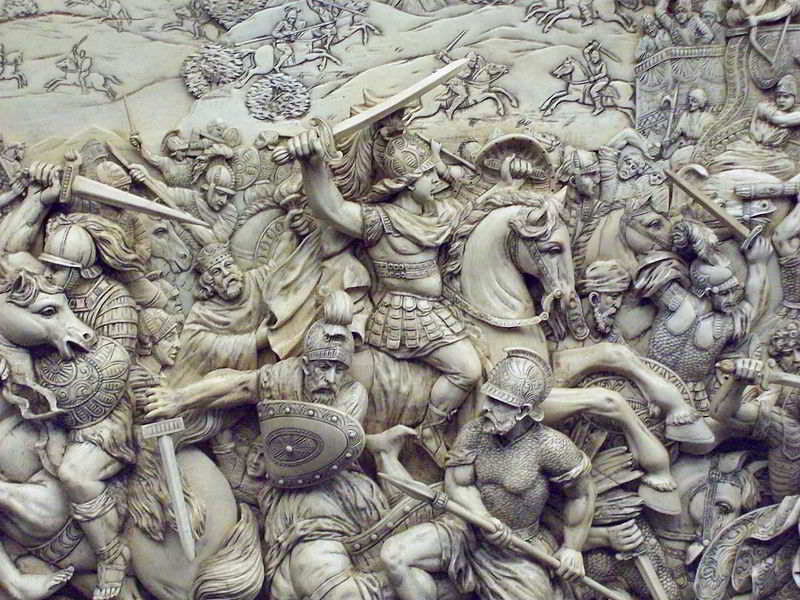
Synopsis
Ancient sources on the Hellenism of the ancient Macedonians are not always clear. They sometimes paint a picture of people who lived on the fringes of the Greek world, and who were not always considered Hellenes by their southern kin. People like Demosthenes called Philip II a ‘barbarian’, while Isocrates referred to him as a man ‘beyond any of the Hellenes’ and a man of the ‘blood of Hellas’. We have little evidence regarding what Philip exactly thought of himself. All his actions point to his Hellenic self-identification. However, we do not have the unmistakable declarations we find in Alexander. Alexander unambiguously self-identifies as a Hellene. All the sources we have available to us speak of an Alexander who repeatedly affirms his Hellenic roots and intrinsic Hellenism. This lecture focuses on the self-identification of Alexander the Great as presented in the Hellenistic writings of both Greek and Roman writers. It also examines Alexander’s self-identification, but also identification by others, in the 3rd century CE folkloric tradition of Pseudo-Callisthenes
|