|
2017 Greek History and Culture Seminars ͏ ͏ ͏ ͏ ͏ ͏ ͏ ͏ ͏ ͏ ͏ ͏ ͏ ͏ ͏ ͏ ͏ ͏ ͏ ͏ ͏ ͏ ͏ ͏ ͏ ͏ ͏ ͏ ͏ ͏ ͏ ͏ ͏ ͏ ͏ ͏ ͏ ͏ ͏ ͏ ͏ ͏ ͏ ͏ ͏ ͏ ͏ ͏ ͏ ͏ ͏ ͏ ͏ ͏ ͏ ͏ ͏ ͏ ͏ ͏ ͏ ͏ ͏ ͏ ͏ ͏ ͏ ͏ ͏ ͏ ͏ ͏ ͏ ͏ ͏ ͏ ͏ ͏ ͏ ͏ ͏ ͏ ͏ ͏ ͏ ͏ ͏ ͏ ͏ ͏ ͏ ͏ ͏ ͏ ͏ ͏ ͏ ͏ ͏ ͏ ͏ ͏ ͏ ͏ ͏ ͏ ͏ ͏ ͏ ͏ ͏ ͏ ͏ ͏ ͏ ͏ ͏ ͏ ͏ ͏ ͏ ͏ ͏ ͏ ͏ ͏ ͏ ͏ ͏ ͏ ͏ ͏ ͏ ͏ ͏ ͏ ͏ ͏ ͏ ͏ ͏ ͏ ͏ ͏ ͏ ͏ ͏ ͏ ͏ ͏ ͏ ͏ ͏ ͏ ͏ ͏ ͏ ͏ ͏ ͏ ͏
|
|
|||||

|
|
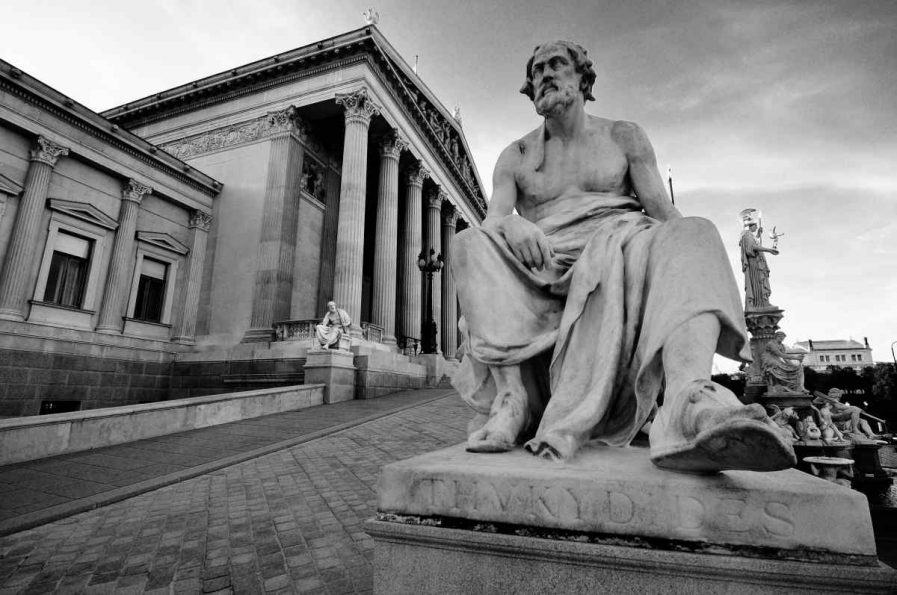
"For so remarkably perverse is the nature of man that he despises whoever courts him, and admires whoever will not bend before him." - Thucydides |
||
Open Seminar: Thucydides: the Historian as PhilosopherLocation: Greek Centre, Mezzanine, 168 Lonsdale Street, Melbourne |
||
SynopsisThucydides’ History of the Peloponnesian War is arguably the founding text of the historical discipline as we know it today. Written after Thucydides, a General, had withdrawn from active service, it traces the origins and course of the great war between Athens and her Allies and Sparta and her Allies, the rise and then fall of Athens in the disastrous imperial campaign in Syracuse. Thucydides’ remarkable opening book reconstructs early Greek history, with a view to establishing the claims of the Peloponnesian War to being the greatest Polemos up until that time. In doing so, he stakes a claim for the superiority of his own “historical” form of inquiry over the poets led by Homer, who had elevated the Trojan War as the greatest military engagement then known. Pitting a naval against a sea power, an inland versus a port city, a dynamic, adventurous, intellectual power versus a static, cautious and conservative one, Thucydides argues that his study of this war will be a possession for all times, since it engages such fundamental oppositions and tendencies within the human condition. So what lessons does Thucydides allow us to draw, of a philosophical kind, from his account of Athens’ and Sparta’s struggles? Dr Sharpe will look at the novelty of Thucydides’ mode of inquiry, with its ideal of a reasonable impartiality (a “view from on high” in a leading commentator’s phrase), as well as several celebrated episodes in the text: the plague at Athens that follows Pericles’ famous oration, the civil war in Corcyra, the Athenian treatments of Mytilene and Melos, and the lead up to the Syracusan disaster. |
||
|
|||||
SponsorsWe thank the following donor: Costas & Vicky Dimaras During the course of the year considerable expenses are incurred in staging the seminars. In order to mitigate these costs individuals or organisations are invited to donate against a lecture of their choice. You too can donate for one or more seminars and (optionally) let your name or brand be known as a patron of culture to our members, visitors and followers, as well as the broader artistic and cultural community of Melbourne. Please email: info@greekcommunity.com.au or call 03 9662 2722. We also thank the following corporate sponsor: |
||
|

|
|||||


 |