|
| |
VIRTUAL OPEN LECTURE: NAUE II Swords, Germs & Iron
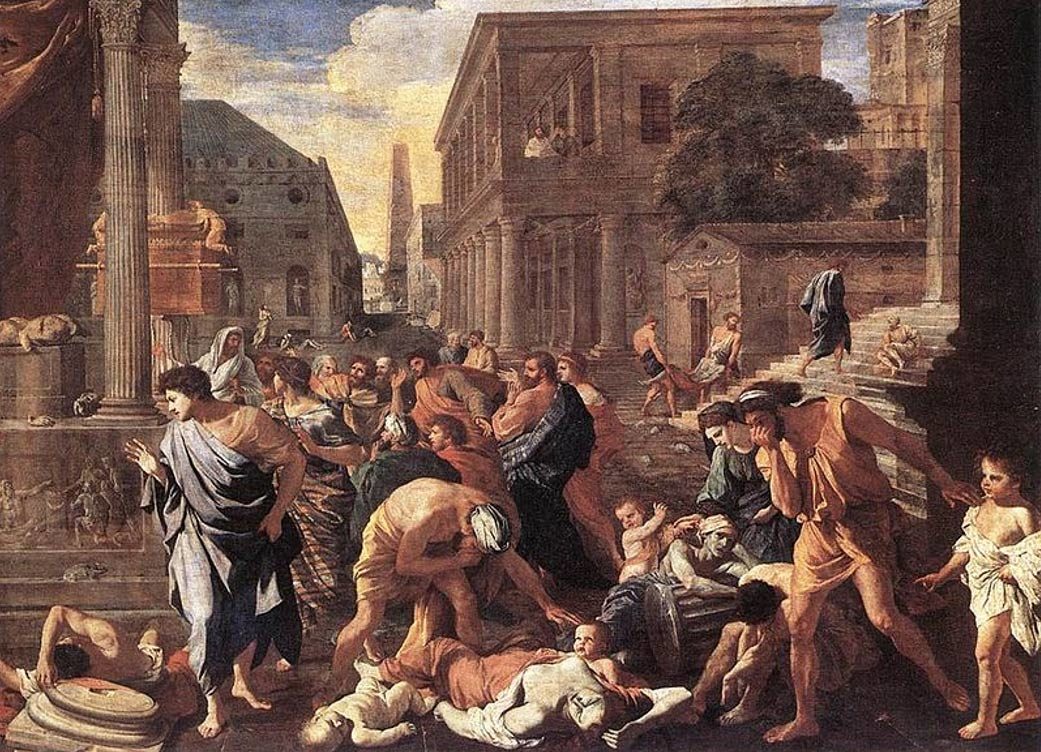
What the Covid-19 Pandemic Can Tell Us About the Bronze Age (12th cent) Collapse in Greece
Location: Zoom Webinar, YouTube Live Stream, Facebook Live Stream
Date: THURSDAY - 25 Jun. 2020 @ 7:00pm
Presenters: Professor Louise Hitchcock
Language of Presentation: English | R.M.L.G.*: 0 - No knowledge of Greek required.
Entry: FREE
|
|
|
|
|
| |
Synopsis
My talk re-examines theories of events and mythologies surrounding the end of Bronze Age (12th century BCE) in the Mediterranean, which resulted in collapse, depopulation in Greece, and the destruction of the Mycenaean civilization as well as of many sites around the Mediterranean.
The once popular Dorian invasion of Greece from the north, which is found in older books, is largely dismissed nowadays by scholars as an Aryan fantasy. Plague, climate change, famine, and earthquakes are other proposed causes for the end of the Bronze Age. In the past, such proposals have been difficult to accept as drivers of destruction as it might indicate that people were too sick or hungry to destroy cities.
Thus, events like plague or famine were seen as unable to account for destruction or for the appearance of new forms of weaponry including the Naue II or cut and thrust sword, the Perstosa Italian dagger, and the socketed spear, followed by the appearance of iron weaponry. The destructions and these new weapons could only result from human agency.
It will be suggested in this talk that observations of the social and economic effects of the Coronavirus pandemic can provide us with a more nuanced understanding of the way social breakdown caused by pandemic might have contributed to creating an opportunity for military action by non-state actors including a dissatisfied rural population as well as the so-called Sea People, known from Egyptian records as well as from Old Testament accounts of the Philistines.
|
|
|
|
|
| |
Bio
Louise Hitchcock is Professor of Aegean Bronze Age Archaeology in the Classics and Archaeology Program at the University of Melbourne. She is the author of Minoan Architecture: A Contextual Analysis, Theory for Classics, Aegean Art and Architecture (co-authored with Donald Preziosi), and is the co-editor of DAIS: The Aegean Feast, Aegaeum 29 and of the Festschrift for Aren Maeir, as well as the author of over 90 articles dealing with Aegean, Cypriot, and Philistine archaeology, architecture, theory, gender, and space. Her current research is engaged with architecture, piracy, Aegean, Cypriot, and Philistine identities, interconnections, and entanglements. She has done fieldwork in California, Cyprus, Crete, Egypt, Greece, and Syria. The Australian Research Council and INSTAP has funded her recent excavations at the Philistine site of Tell es-Safi/Gath, where she was an area supervisor. She also directed the Vapheio-Palaiopyrgi Survey Project in Laconia. She has also been awarded multiple competitive fellowships including a Fulbright and National Endowment for the Humanities.
|
|
|
|
|
| |
How To Participate
In order to keep everyone safe we have organized this seminar to be delivered online.
However, we are well aware that for some, a large part of the appeal of our seminars is the very active audience participation. Therefore we are providing two ways for you to enjoy the seminar:
If you want to actively participate and ask questions at the end of the seminar you will need to join us through a Zoom Webinar - for which you'll need to pre-register by following this link:
https://us02web.zoom.us/webinar/register/WN_HGeIkDW3RVOxgV7gT5Mlxw
If you prefer to sit back and enjoy the show, just join us through our Facebook page or our YouTube page where we'll be live streaming the event.
|
|
|
|
|
| |
Sponsors
During the course of the year considerable expenses are incurred in staging the seminars. In order to mitigate these costs individuals or organisations are invited to donate against a lecture of their choice. You too can donate for one or more seminars and (optionally) let your name or brand be known as a patron of culture to our members, visitors and followers, as well as the broader artistic and cultural community of Melbourne. Please email: info@greekcommunity.com.au or call 03 9662 2722. We also thank the following corporate sponsors:
|
|
|
|
| |
* Recommended Minimum Level of Greek in order to enjoy this Event, on a scale of 0 to 5.
|
|
|
|
| |
|
The Greek Community of Melbourne is registered as a charity with the Australian Charities and Non-Profits Commission ABN 14004258360
|
|
|
|
|
|