|
| |
VIRTUAL OPEN LECTURE: Performing Greek Tragedy around the Mediterranean
Location: Zoom Webinar, YouTube Live Stream, Facebook Live Stream
Date: THURSDAY - 23 Jul. 2020 @ 7:00pm
Presenters: Dr. Sebastiana Nervegna
Language of Presentation: English | R.M.L.G.*: 0 - No knowledge of Greek required.
Entry: FREE
|
|
|
|
|
| |
Synopsis
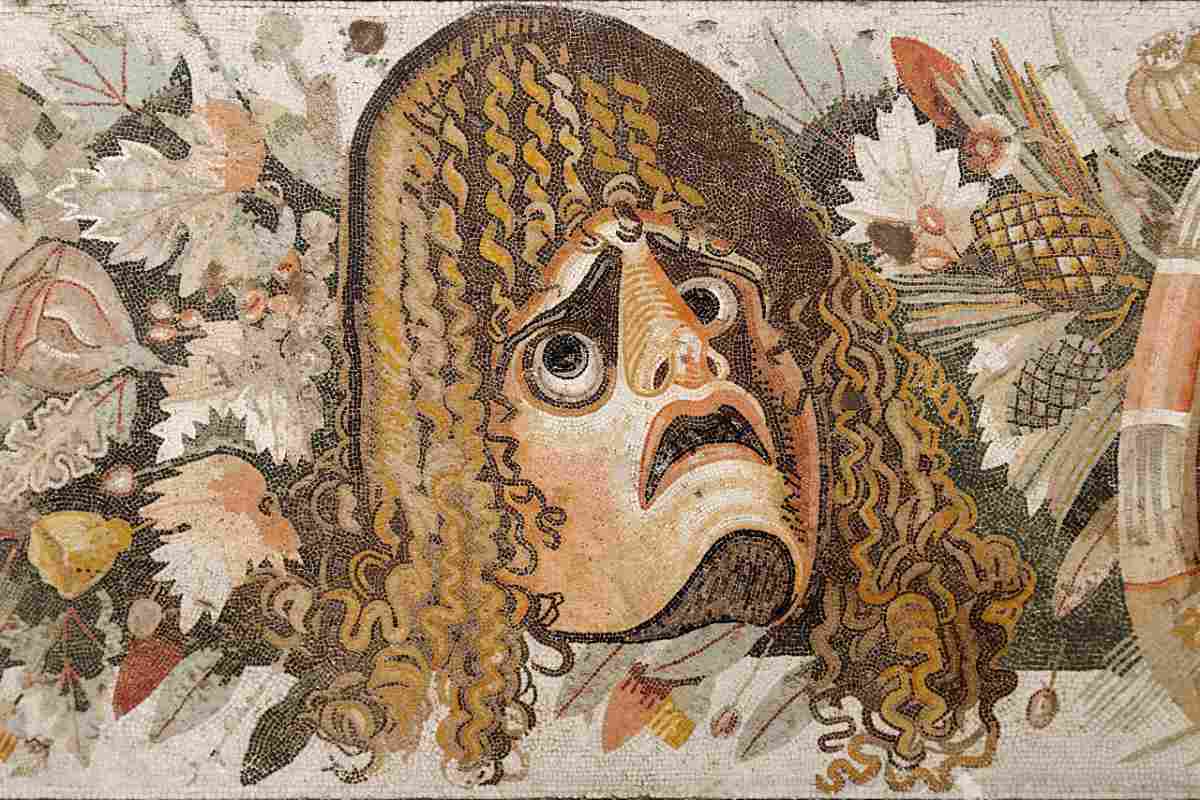
Born and fostered in Classical Athens, tragedy was a quintessential Athenian genre yet it soon spread around the Mediterranean, especially in the West. This seminar reconstructs the theatrical reception of Greek tragedy from the fourth through to the first century BC by focusing on three main contexts: fourth-century Athens, fourth-century South Italy and Republican Rome. These sources allow us to identify the plays that kept attracting ancient audiences and how different cultural communities responded to them.
|
|
|
|
|
| |
Bio
Sebastiana Nervegna works on Greek and Roman drama and, more generally, on the history of the ancient theatre and its reception in antiquity. She was educated in Italy (University of Bologna) and in Canada (University of Toronto) and she has been working in Australia for about ten years. She spent six years at the University of Sydney, first as the Kevin Lee Postdoctoral Research Fellow, funded by the Kudos Foundation, and then as an Australian Postdoctoral Fellow funded by the Australian Research Council. She is currently an ARC Future Fellow at the Centre for Ancient Cultures at Monash. She is the author of two books, Menander in Antiquity: The Contexts of Reception (Cambridge University Press, 2013) and The Reception of Greek Tragedy in the Ancient Theatre (forthcoming with Cambridge University Press), as well as several articles, book chapters and contributions to reference works. Her current project is a book on the reception of Greek drama in South Italy.
|
|
|
|
|
| |
How To Participate
In order to keep everyone safe we have organized this seminar to be delivered online.
However, we are well aware that for some, a large part of the appeal of our seminars is the very active audience participation. Therefore we are providing two ways for you to enjoy the seminar:
If you want to actively participate and ask questions at the end of the seminar you will need to join us through a Zoom Webinar - for which you'll need to pre-register by following this link:
https://us02web.zoom.us/webinar/register/3815949745193/WN_fTMYqCtlTm6OKm5GyME_MA
If you prefer to sit back and enjoy the show, just join us through our Facebook page or our YouTube page where we'll be live streaming the event.
|
|
|
|
|
| |
Sponsors
We thank the following donor for making this seminar possible: Anastasia Sougleris.
During the course of the year considerable expenses are incurred in staging the seminars. In order to mitigate these costs individuals or organisations are invited to donate against a lecture of their choice. You too can donate for one or more seminars and (optionally) let your name or brand be known as a patron of culture to our members, visitors and followers, as well as the broader artistic and cultural community of Melbourne. Please email: info@greekcommunity.com.au or call 03 9662 2722. We also thank the following corporate sponsors:
|
|
|
|
| |
* Recommended Minimum Level of Greek in order to enjoy this Event, on a scale of 0 to 5.
|
|
|
|
| |
|
The Greek Community of Melbourne is registered as a charity with the Australian Charities and Non-Profits Commission ABN 14004258360
|
|
|
|
|
|